
Heatstroke
Last Updated: January 27, 2024
In fact, it’s one of the main causes of medical emergencies at events across the country. Heat-related illnesses like heat exhaustion and heatstroke can be terrifying experiences, and are much more serious than most people realize. Sometimes heat illnesses can look and feel like an altered state (being high).
Dancing for long periods of time, especially in hot environments, is a major risk factor for dehydration and heat-related illness. Heat exhaustion can become life-threatening heatstroke if someone isn’t cooled off.
Deaths from heatstroke have occurred at raves, nightclubs, festivals, and pretty much everywhere else in the world, often when no drugs were consumed at all. Certain drugs can increase your risk of heatstroke by:
- Masking the symptoms. When you’re altered it’s not always easy to keep track of your body, especially when it comes to determining what side effects (like excessive sweating, or feeling anxious) are normal.
- Increasing your body temperature. Stimulants, for example, directly increase body temperature, an effect that can be compounded when you mix multiple of them together.
- Some drugs might become more neurotoxic under specific overheating conditions.
- Note: It’s important to read scientific journals thoroughly! This article, for instance, is a “proof of concept” showing that methcathinones (a kind of stimulant) become more neurotoxic after 24 continuous hours of exposure in 104º environments. It’s unclear how well this translates to humans in realistic settings. Similar concerns have been raised about stimulants like MDMA and other amphetamines.
- Heatstroke causes tachycardia (fast heart rate). This can be particularly dangerous if someone has taken stimulants that also raise heart rate and blood pressure.
- Certain substances may increase the seizure risk associated with heatstroke. Seizures can happen – sober or not – from being generally overstimulated or overwhelmed. Drugs that lower the seizure threshold, like antipsychotics and tramadol, increase this risk.
While heatstroke is a serious condition, taking simple precautions goes a long way in reducing the likelihood of experiencing heat-related illness. Being able to identify and respond to heatstroke is critical for all kinds of environments, especially where lots of physical activity is taking place.
Preventing heatstroke basically comes down to keeping your body cool, but the solution isn’t to drink as much water as possible – over-hydrating can also be very dangerous.
Your body has a delicate balance of electrolytes, chemicals that conduct electricity when they’re dissolved in water. The main electrolytes are sodium, calcium, potassium, chloride, phosphate, bicarbonate, and magnesium.
Sodium (salt) is one of the most abundant electrolytes. When you’re taking in too much or too little water, your salt-to-water ratio can be disrupted and cause serious physical problems.
- Hyponatremia: When you have too much water in your body, and too little salt in comparison. (Over-hydration.)
- Hypernatremia: When you have too little water in your body, and too much salt in comparison. (Dehydration.)
A good rule of thumb is to drink a little less than 1 L of water per hour when you’re exerting yourself, even if you don’t feel thirsty. This translates to around 3-4 cups of water per hour. The CDC advises against drinking more than 1.5 L of water per hour, which can lead to hyponatremia.
Basic Tips
- Drink a bottle of water an hour (2-4 cups or about 1 L), and eat some salty snacks.
- Start drinking water a few hours before dancing (and keep drinking it afterwards).
- Try to stay in good physical shape to help your heart work less hard while you exert yourself.
- Wear loose-fitting or athletic clothes that wick away moisture.
- Protect yourself from the sun with a hat, sunglasses, sunblock, and lip balm.
- Take breaks from dancing and allow your body to cool down. (Chill out areas are perfect for this!)
- Electrolyte drinks can be helpful for replenishing salt if you’re sweating a lot, although adequate food intake usually is sufficient for this. (Be mindful of sports drinks with caffeine or loads of sugar in them.)
There have been some cases of hyponatremia deaths (drinking too much water) at music events, where the individual incorrectly believed that drinking water would reduce the unpleasant effects of a negative drug experience. Panic about being in life-threatening danger, along with the belief that drinking lots of water is the solution to overheating, may have played a role in these deaths.
It’s important to remember that water is not an antidote to any psychoactive drug, and that nobody should drink more than 3-4 cups (~1-1.2 L) an hour.
Some People Are More Susceptible than Others
Some people overheat easily, which could be a genetic trait, a result of certain chronic illnesses, or a consequence of diseases someone has had in the past. Patients who have survived meningitis, for example, sometimes report that they have an increased sensitivity to heat, even years after their recovery.
If you have (had) meningitis, a chronic illness, or a predisposition to heat sensitivity, or if members of your immediate family are heat sensitive, you may be at a higher risk of heatstroke than others.
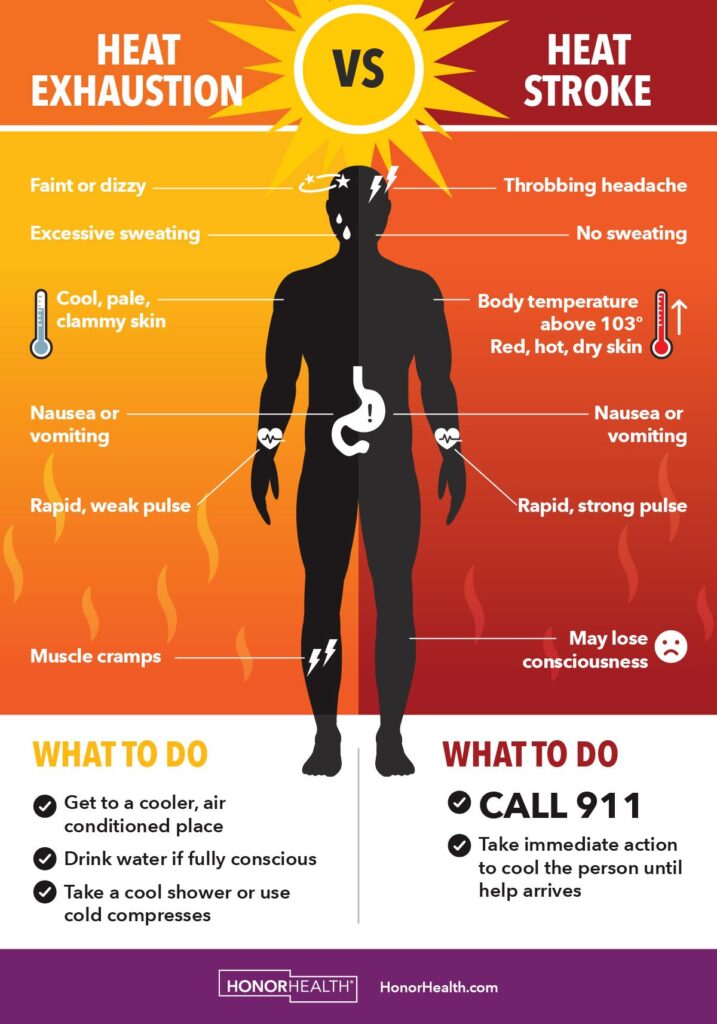
- Failure to sweat
- Cramps in the legs, arms, and back
- Giddiness, dizziness, headache, fatigue
- Suddenly feeling really tired, irritable and confused
- Nausea or vomiting
- Fainting or loss of consciousness
- Tachycardia (rapid heart beat)